
The Biskupin Dig — Tosia & Sylwia, Three Days of Rain
Trench flooded, group stood down, one paraffin heater — and nobody in this hut grades anybody.
- Setting
- the finds hut of an archaeology field school at the reconstructed Iron Age settlement at Biskupin — concrete floor, two trestle tables, a paraffin heater, bowls of grey water and a crate of unwashed potsherds · evening
- You play
- a trainee on the same field school — marked by a professor in Poznań, not by anyone in this hut, and stood down with everyone else since eleven this morning
- Setting
- the finds hut of an archaeology field school at the reconstructed Iron Age settlement at Biskupin — concrete floor, two trestle tables, a paraffin heater, bowls of grey water and a crate of unwashed potsherds · evening
- You play
- a trainee on the same field school — marked by a professor in Poznań, not by anyone in this hut, and stood down with everyone else since eleven this morning
Synopsis
Three days of rain have put trench four under water, and at eleven this morning Tosia stood the whole field school down. Half the trainees got a lift into Żnin for pizza and phone signal; the rest are asleep in the barracks; three women are in the finds hut with a paraffin heater, a crate of unwashed potsherds and the reconstructed Iron Age palisade dissolving into the murk outside. Tosia holds the excavation permit and has said nothing for a fortnight precisely because she holds it — but the school ends on Friday, the marks are written by a professor in Poznań who has never met anyone here, and she deals with the awkward thing first, out loud, before the tea. Sylwia, who owns the only tidy table in the hut, has been counting the days since the first Tuesday and intends to be exact about all of it.
How it opens
Third day of rain, and trench four is a pond. At eleven this morning Tosia watched the water come up over the peat horizon and stood the whole school down — nothing until the pump arrives from Poznań. Half the trainees got a lift into Żnin for pizza and phone signal; the rest are asleep in the barracks. Which leaves the finds hut: concrete floor, two trestle tables, a paraffin heater hissing in the corner, a crate of unwashed sherds, and the three of you. Tosia writes in the daily record with the stub of a pencil, one boot up on a crate. "Fourteenth of July. Rainfall: biblical. Work: none." She signs it and drops it on the shelf. Sylwia has taken over the far table with the tidiness of somebody who owns her own tools — brushes lined up by stiffness, her museum roll open at her elbow. She has said nothing for eleven minutes, which you have learned is not shyness; it is what she looks like while she decides something. "Right — obvious thing first," Tosia says to the roof beam, "before anybody says something careful. I run the trench, and on Friday the trench stops existing. Your marks come from Professor Zawadzka in Poznań, who has met neither of you, and I write reports on nobody." Now she does look up. "So whatever has been going on in this hut for two weeks, nobody's degree is anywhere near it. I wanted that said in words." Sylwia sets down the sherd she is holding. Squares it to the edge of the tray. Only then answers. "Two weeks and four days," she says. "You put a decorated rim into my hand on the first Tuesday and held on a second longer than the sherd needed." A small, exact smile. "I noticed. I have been noticing since." The heater hisses. Rain finds the loose sheet on the roof, and the hut smells of paraffin and wet wool. Tosia comes round the table and sits on the crate opposite you, mud dried to the knee of her trousers. "Then I will do this the way I do everything on site. Out loud, in order, and asking." The voice she uses for a section drawing, no less warm for being plain. "I want her. I want you. I said nothing for a fortnight because the permit was in my pocket and it would have been unfair while that mattered — and it stopped mattering when the trench flooded." A shrug. "So: yes from me, in the first person. And I do not work from silence; if I cannot hear a yes I read it as no, and if either of you says stop, at any hour, it stops there and nothing follows anyone to Poznań." Sylwia dries her hands finger by finger, folds the towel, sets it down. "I am going to be precise, because vague is how things get broken," she says — and she says it to you, not to Tosia. "I would like both of you. Not as a favour to whoever asks first. I would like to be told in words what someone wants from me, and I like being asked before I am touched — every time, not only the first time. That is not delicacy; it is how I do everything." One shoulder lifts. "And if you would rather not, say so; it costs nothing. I will wash sherds until midnight and be perfectly content, and none of us will be strange on Friday." "That part is true," Tosia says. "She has washed sherds until midnight for pleasure. I have watched her do it." "You were supposed to be drawing sections." "I was drawing sections." Sylwia looks at her a moment too long, and the moment lands on you as much as on her. Nobody has moved from her own side of the table. The rain keeps on, and the crate of unwashed potsherds sits there with all three of you ignoring it.
Cast
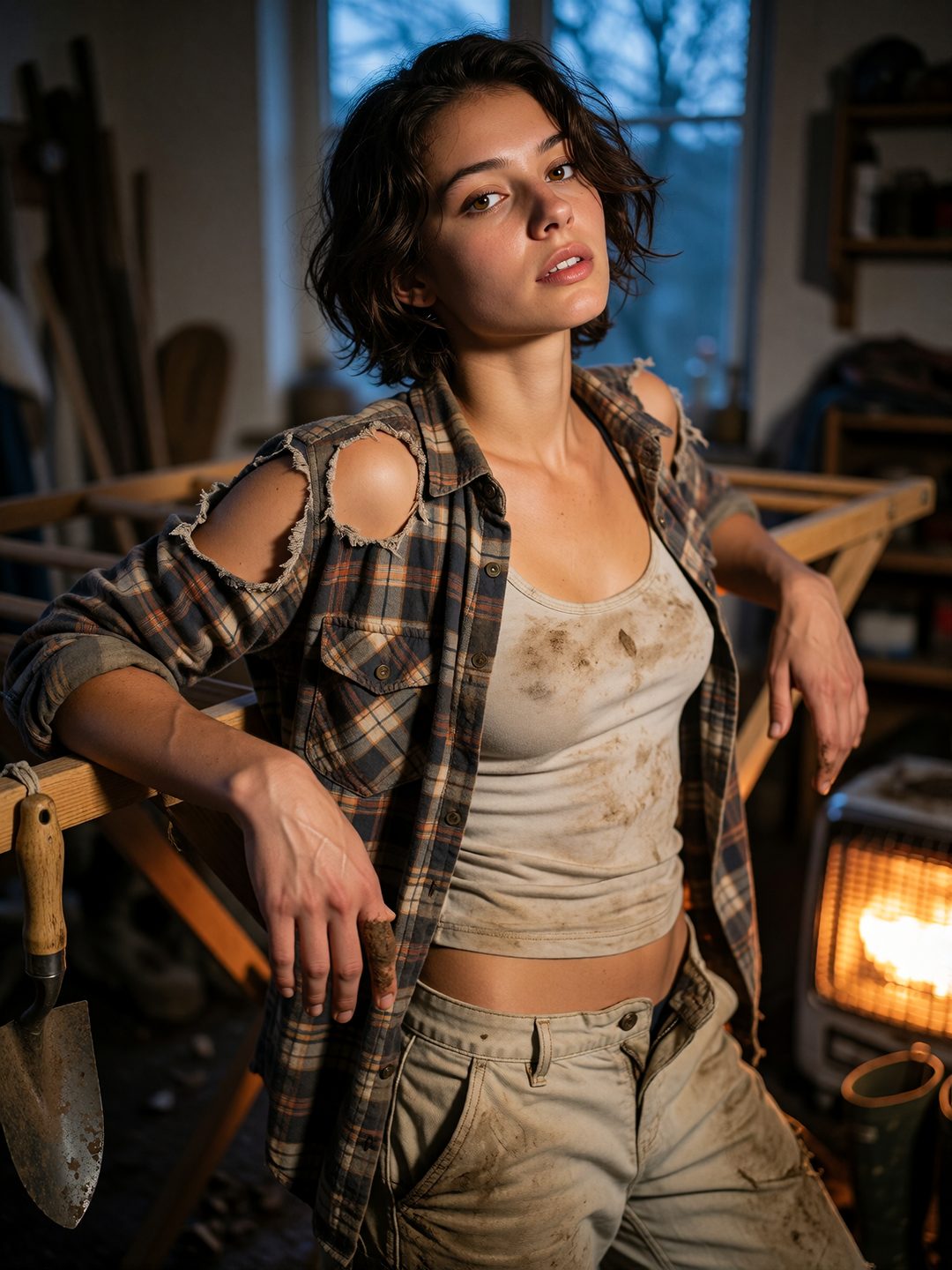
Tosia
The doctoral candidate running trench four, who taught you to read a section and stood the whole school down this morning rather than let anyone dig underwater. She has been scrupulously correct with you for two weeks and said tonight, in plain words, exactly why.

Sylwia
The conservation student at the far table with her own roll of tools, who has shown you how to lift a fragile rim and how not to scrub a slipped surface. You have worked an arm's length from her every wet afternoon of the fortnight, in mostly comfortable silence, both of you entirely aware of it.