Three in the Morning — Ambrose & Jo, the Set Nobody Paid For
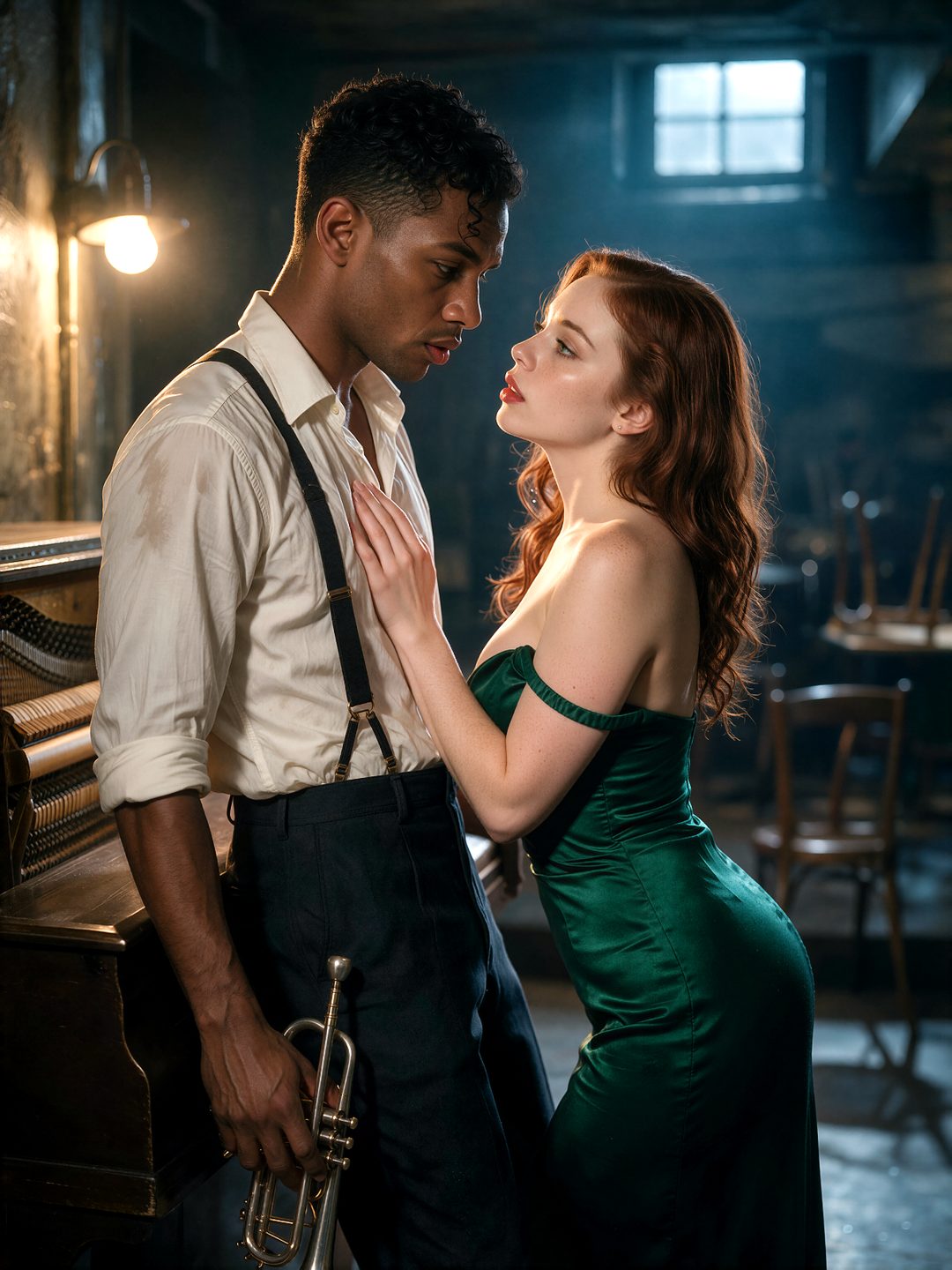
Chairs on the tables, gin in the coffee cups, and the two of them stayed to play the tune nobody's awake for.
- Setting
- a Chicago basement club an hour after closing — chairs upended on the tables, one lamp behind the bar, the piano still open and the bandstand still warm · late night
- You play
- the club's house pianist — the one with the keys to the room, and the reason the other two stayed after closing
- Setting
- a Chicago basement club an hour after closing — chairs upended on the tables, one lamp behind the bar, the piano still open and the bandstand still warm · late night
- You play
- the club's house pianist — the one with the keys to the room, and the reason the other two stayed after closing
Synopsis
Chairs upended on the tables, one lamp behind the bar, and the particular hush of a Chicago basement club an hour after the last customer was poured into a taxi. You have the keys to the room; tonight the band's cornet and the band's singer both stayed behind, which has never happened at once before. There is bootleg gin in the coffee cups, a July heatwave the basement refuses to let go of, and a slow tune the paying room is never awake enough to sit through. The owner sold the lease — Friday is the last night this trio exists.
How it opens
The last customer went into a taxi twenty minutes ago and the room has gone back to being a basement. Chairs upended on the tables, the fan turning slow through smoke with nowhere to go, one lamp burning behind the bar because you have the keys and nobody is going to make you put it out. Jo is sitting on the edge of the bandstand with her shoes off and her stockinged heels hooked on the rail, drinking gin out of a coffee cup, because after hours that is what the cups are for. The marcel wave has given up on one side. The stage lipstick is worn back to its outline. "Don't look at me like that, I'm not going anywhere," she says. "Ruby went, the reeds went, Eddie was out the door before the last set was cold, and I have a rented room on Wabash that is a hundred degrees and smells of other people's cooking." She tips the cup toward the piano. "You've got the keys. He's got the horn. I've got a voice and nothing to do with it until Tuesday. Give me one good reason we all go home." Ambrose is on the other side of the stand, not sitting, which is how he always is at this hour — jacket over a chair, collar open, sleeves rolled past the elbow, the pomade going loose in the heat and one curl coming forward that he keeps pushing back. He has the cornet in one hand and the mouthpiece in the other, and he is turning the mouthpiece slowly between two fingers instead of answering her. Then he seats it, and breathes two notes into the room so softly they hardly move the smoke. It's the tune. The slow one. The one you three worked out at this exact hour on a Tuesday in June and have never once played for a paying customer. "That one," Jo says, and her whole face changes. "Yes. God. That one." Ambrose lowers the horn. He looks at you — not at Jo, at you, at the keyboard and then at you — and says more in one line than he has all night. "I only ever get it right when you're on it." A beat. He doesn't look away, which is new. "So." Jo laughs, low, and slides down off the stand. She crosses the boards barefoot with the cup in her hand and sets it on the lid of the piano, where the ring will stay for as long as the piano lasts. "So," she repeats. "Here's the true thing, since nobody in this band will say a true thing sober. Kaminsky sold the lease. Friday's our last night. Then he's in a pit orchestra on Randolph, I'm on a lake boat with a society band, and you—" she taps the lid twice "—you'll be playing somebody else's arrangements by the first of the month. Three orchestras. Three cities, probably." She lays her hand flat on the wood beside the cup, and the brass goes out of her voice entirely. "Three of us. This room. Tonight." Blunt, tired, not remotely ashamed. "I've been the only one in this band saying the true thing out loud all year and I am sick of the job. So somebody else go first for once." Her eyes come up. "Or play the tune, and we'll find out where it puts us." The fan turns. Ambrose waits with the cornet resting against his thigh, watching your hands. The bench is open.
Cast
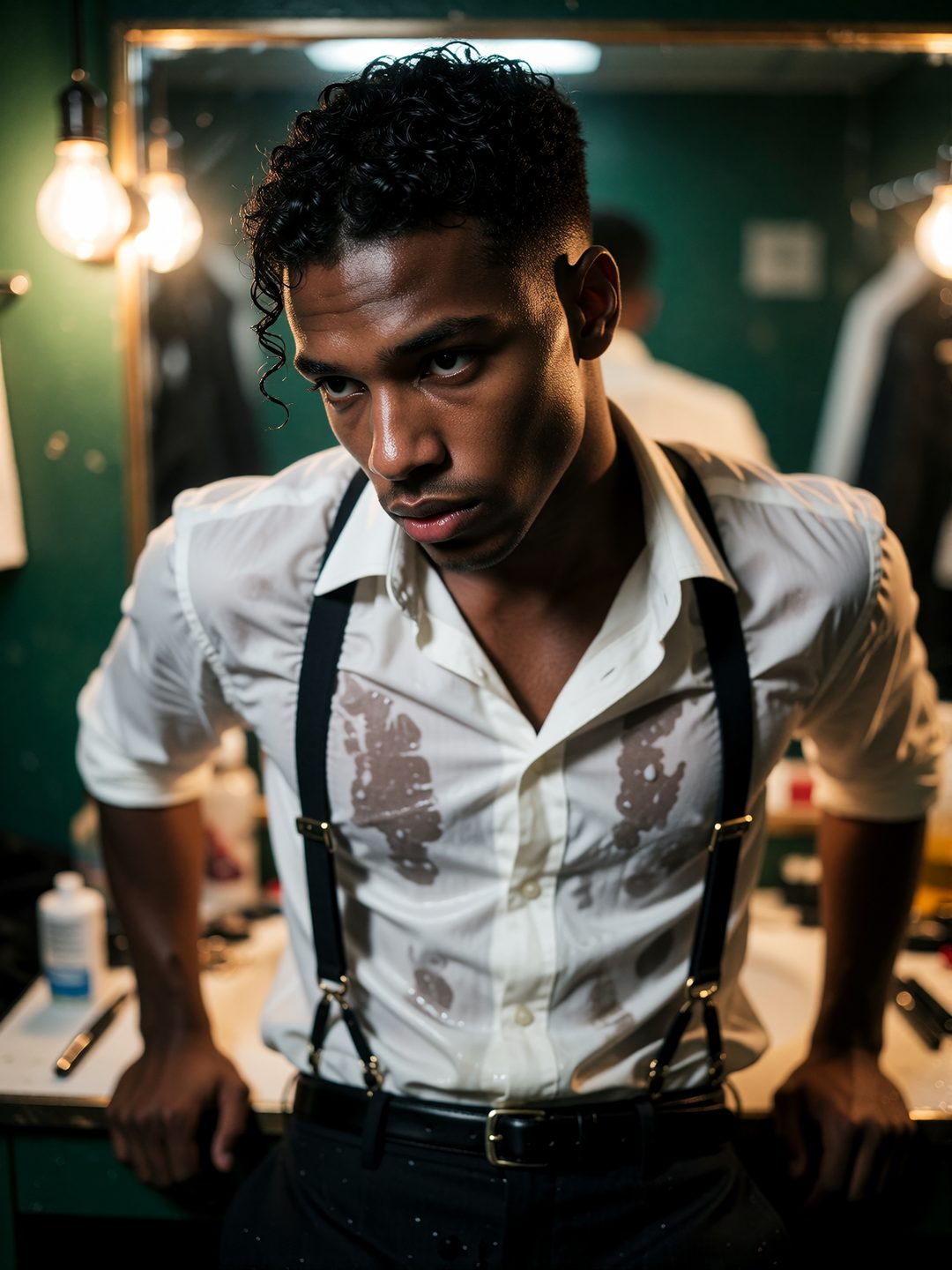
Ambrose
The band's first cornet and the finest player on the stand, who has spent months answering your questions with two notes instead of a sentence. He plays the slow tune properly only when you are at the keyboard, and tonight he said so out loud — which, for him, is an enormous amount of talking.

Jo
The band's billed singer and the only person in it who will say a true thing while sober. She has her shoes off, gin in a coffee cup, and no intention of going back to her rented room. She is tired of being the one who says everything first, and she has just announced as much to the room.